
Foodbank use tops one million for first time says Trussell Trust
April 2015
- Record numbers seek help from UK’s biggest foodbank charity.
- More than 1 million people received three days’ food from Trussell Trust foodbanks, compared to 900,000 last year. Including almost 400,000 children. (Note: these are not all unique users; this is a measure of volume. See notes to editor on how Trussell Trust statistics are compiled)
- Faculty of Public Health supports Trussell Trust’s call to listen to the experiences of people in crisis in order to reduce poverty and hunger in the UK.
The latest figures published by the Trussell Trust show that over 1,000,000 people have received at least three days’ emergency food from the charity’s foodbanks in the last twelve months, more than in any previous year. The data indicates that despite signs of economic recovery, the numbers of people turning to foodbanks continues to grow
What the figures show
1,084,604 people – including 396,997 children – received three days’ food from the Trussell Trust’s network of over 400 foodbanks in 2014/15, compared with 913,138 in the 2013/14 financial year. This is an increase of 19 percent.* [see notes to editor on how Trussell Trust statistics are compiled]
Whilst problems with benefits remain the largest driver of foodbank use, there has been an increase in numbers referred due to low income in the last year.
‘Low income’ referrals have grown from 20 percent in 2013/14 to 22 percent of all referrals in 2014/15. Foodbank managers reported that clients who are in work are struggling with insecure work, low wages and high living costs.
Benefit delays and changes have proportionately decreased from 48% to 44%.
Referrals to foodbanks due to sickness, homelessness, delayed wages and unemployment have increased slightly.
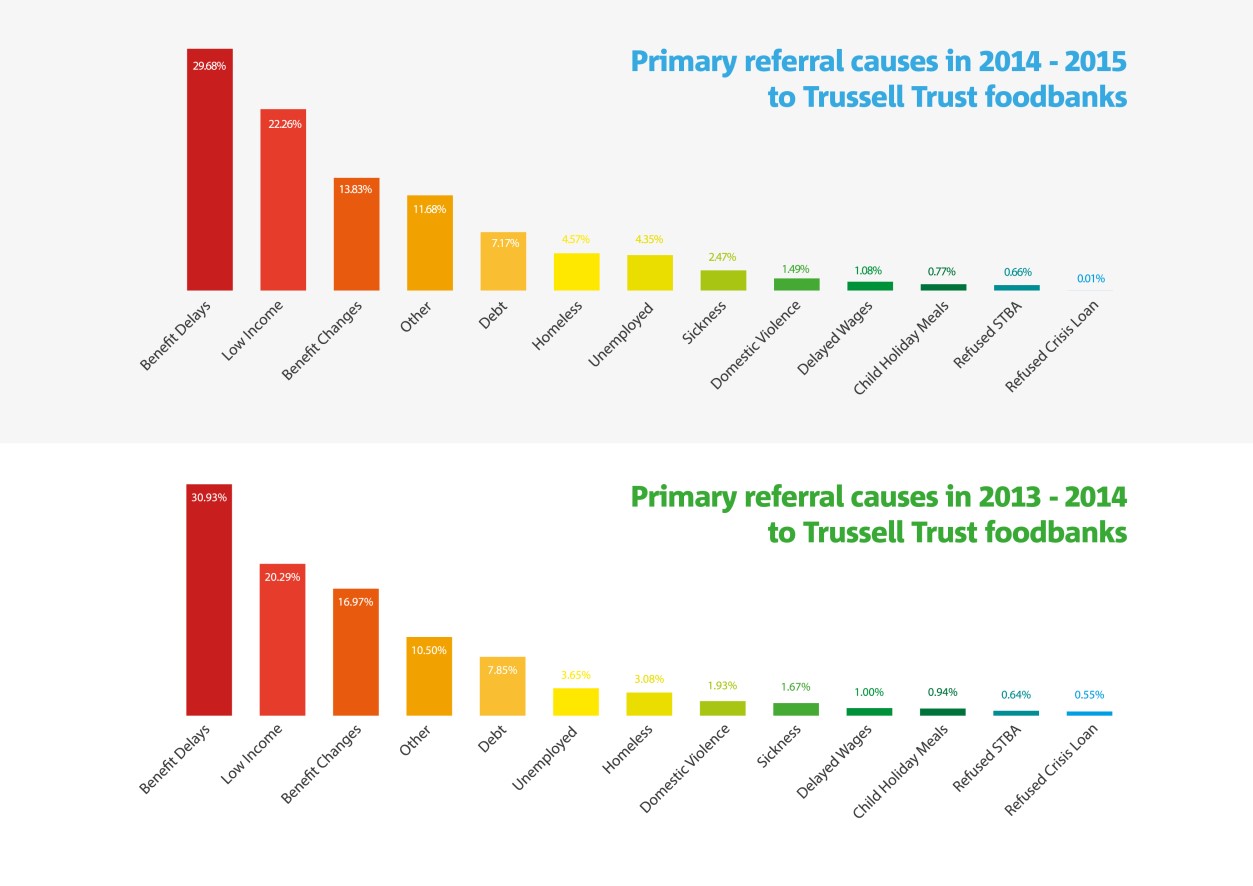
In a recent survey, foodbanks reported that the most significant factors in driving demand were: low income, administrative delays in paying social security benefits, benefits sanctions and debt.
Qualified teacher and mother of two, Susan, says: ‘I have an 18 month old son and an eight year old stepson, I work part time as a teacher and my husband has an insecure agency contract. There are times when he doesn’t get enough hours of work, and we really struggle to afford food and pay the bills. The foodbank meant we could put food on the table’.
Foodbank growth
In the last year, total numbers of foodbanks launched rose by five percent, whilst numbers of people helped by foodbanks rose by 19 percent.

Trussell Trust UK foodbank director Adrian Curtis says:
‘Despite welcome signs of economic recovery, hunger continues to affect significant numbers of men, women and children in the UK today. It’s difficult to be sure of the full extent of the problem as Trussell Trust figures don’t include people who are helped by other food charities or those who feel too ashamed to seek help.’
A mum at a children’s holiday lunch club said that she was skipping meals to feed her children but couldn’t bring herself go to a foodbank, saying: ‘There are people out there more desperate than me. I’ve got a sofa to sell before I’ll go to the food bank. It’s a pride thing. You don’t want people to know you’re on benefits.’
Adrian Curtis continues:
‘Trussell Trust foodbanks are increasingly hosting additional services like debt counselling and welfare advice at our foodbanks, which is helping more people out of crisis. The Trussell Trust’s latest figures highlight how vital it is that we all work to prevent and relieve hunger in the UK. It’s crucial that we listen to the experiences of people using foodbanks to truly understand the nature of the problems they face; what people who have gone hungry have to say holds the key to finding the solution’.
Marcella, a former dental assistant who has chronic back pain and is recovering from a spinal operation, was helped by the foodbank recently and says: ‘It’s so hard to pay rent and survive at the moment. I have friends who are working minimum wage jobs who have had to go to foodbanks. People should not just be surviving, they should be able to live and have a life. I was less than surviving when I went to the foodbank. Going to a foodbank was very emotional for me, I felt a bit ashamed at not being able to support myself but they took the pressure off, they gave me advice and helped me to find a support worker. The foodbank gave me faith that there are people who understand and who you can trust. We need to stop judging people and listen to every individual and understand how they got into the situation.’
Dr John Middleton, Vice President of Faculty of Public Health says: ‘The rising number of families and individuals who cannot afford to buy sufficient food is a public health issue that we must not ignore. For many people, it is not a question of eating well and eating healthily, it is a question of not being able to afford to eat at all. UK poverty is already creating massive health issues for people today, and if we do not tackle the root causes of food poverty now we will see it affecting future generations too. The increased burden of managing people’s health will only increase if we do not address the drivers of people to food banks.’
Carmel McConnell, Chief Executive Magic Breakfast says: ‘New Trussell Trust data showing that nearly 397,000 children needed food bank support last year is worrying. Magic Breakfast has seen an increase in the number of hunger hit schools applying for urgent food deliveries, our waiting list now stands at 270 schools which is an all time high. When children start their school day hungry, they cannot concentrate and risk missing the most important lessons of the day.’
Community impact:
The Trussell Trust’s 400+ foodbanks are run in partnership with churches and communities. Last year the UK public donated 10,280 tonnes of food.
Over 90% of Trussell Trust foodbanks provide additional services alongside food to help people out of crisis long term.

